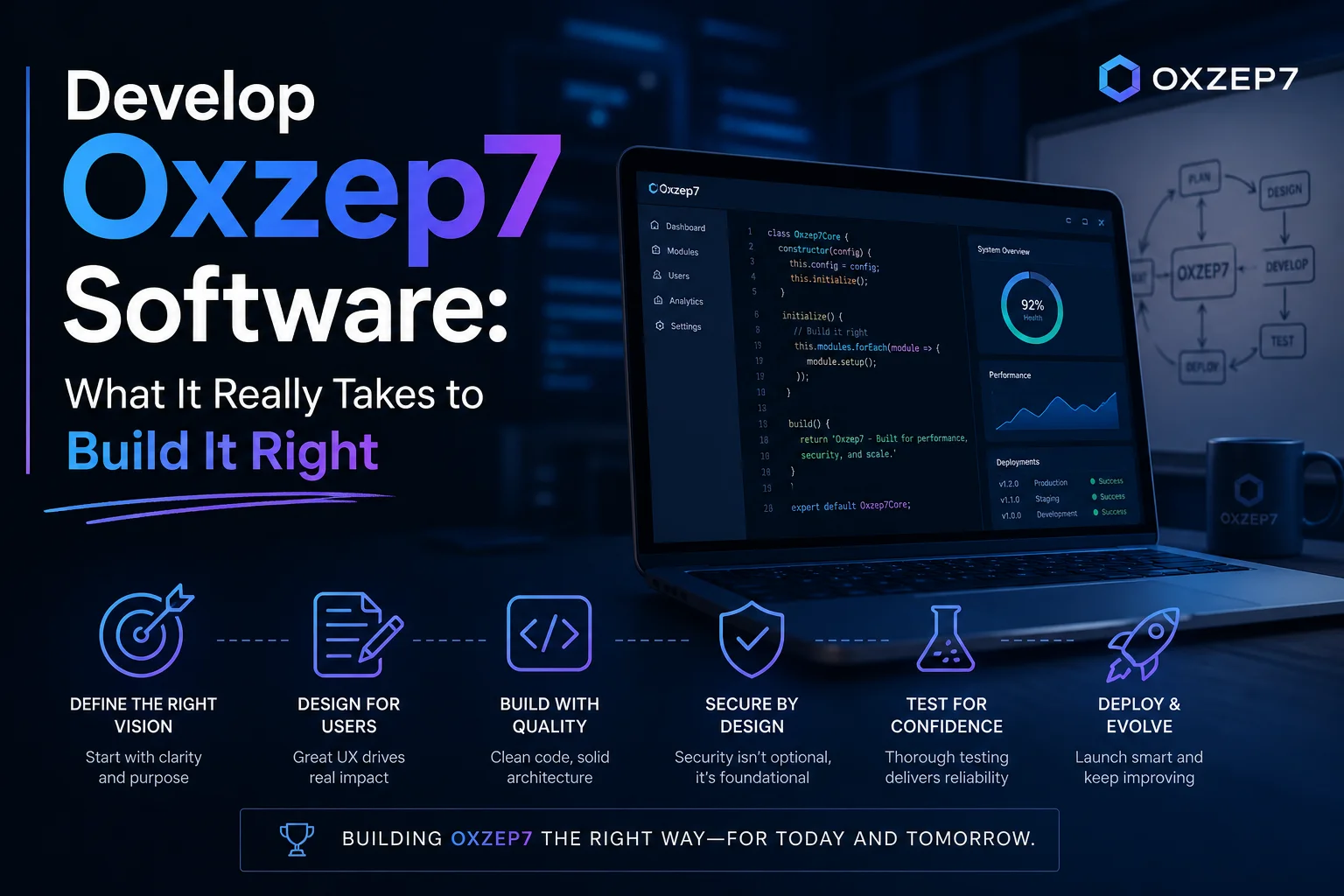
If you’re trying to develop oxzep7 software, you’ve probably realized one thing already—it’s not just about writing code. It’s about understanding what the software should do, who it’s for, and how it will survive in real-world use.
Many developers jump straight into tools and frameworks. That’s usually where things start going wrong. Good software doesn’t begin with code. It begins with clarity.
Let’s break this down in a practical, no-nonsense way.
First, Define What Oxzep7 Software Actually Is
Before development, you need a clear definition. “Oxzep7 software” might refer to a custom system, a platform, or a specialized tool depending on your project.
Ask yourself:
- What problem does this software solve?
- Who will use it daily?
- What makes it different from existing solutions?
If you can’t answer these in simple words, you’re not ready to build yet.
A strong idea reduces rework later.
Plan the Core Features (Not Everything at Once)
One common mistake is trying to build everything in the first version. That leads to delays, bugs, and frustration.
Instead, focus on a minimum usable version.
Start with:
- The main function (your core feature)
- Basic user interface
- Essential data handling
- Simple security measures
You can always expand later. Launching something small but solid is far better than building something big and broken.
Choose the Right Tech Stack Carefully
The tools you pick will shape your entire development process.
There’s no “best” stack—only what fits your project.
For example:
- Use lightweight frameworks if speed matters
- Choose scalable backend systems if you expect growth
- Pick databases based on your data type (structured vs flexible)
Avoid trendy tools unless they truly fit your needs. Stability matters more than hype.
Build With Real Users in Mind
A lot of developers build for themselves, not for users. That’s a problem.
When developing oxzep7 software, think about:
- How easy is it to use?
- Can a new user understand it quickly?
- Does it solve the problem without confusion?
Simple interfaces often win over complex ones.
If possible, test early with real users. Even a few people can reveal issues you won’t notice yourself.
Focus on Clean, Maintainable Code
Fast coding is tempting, especially under pressure. But messy code creates bigger problems later.
Instead:
- Use clear naming conventions
- Keep functions small and focused
- Avoid unnecessary complexity
- Document key parts of your code
Good code is not just about working—it’s about being understandable.
Because sooner or later, you (or someone else) will need to update it.
Don’t Ignore Performance Early
Many developers think performance can be fixed later. That’s risky.
While developing oxzep7 software, keep an eye on:
- Load times
- Database queries
- Memory usage
You don’t need perfect optimization from day one, but you should avoid obvious inefficiencies.
Small improvements early save major headaches later.
Security Should Not Be an Afterthought
Security is often ignored until something goes wrong. By then, it’s too late.
At a minimum:
- Validate all user inputs
- Protect sensitive data
- Use secure authentication methods
- Keep dependencies updated
Even simple applications can become targets if exposed online.
Test in Real Conditions, Not Just Locally
Software that works on your machine isn’t enough.
Test your oxzep7 software in environments that match real usage:
- Different devices
- Slow internet connections
- Unexpected user behavior
You’ll quickly discover issues that don’t appear during development.
Prepare for Iteration, Not Perfection
No software is perfect at launch. And it doesn’t need to be.
What matters is:
- Getting feedback
- Fixing real problems
- Improving step by step
Trying to perfect everything before release often delays progress without real benefit.
A Practical Example
Let’s say your oxzep7 software is a task management tool.
A smart first version would include:
- Creating and editing tasks
- Simple user login
- Basic dashboard
That’s it.
You don’t need advanced analytics, AI features, or complex integrations right away. Those come later, based on user needs.
Final Thoughts
To successfully develop oxzep7 software, you need more than technical skill. You need clarity, discipline, and a user-focused mindset.
Start small. Build what matters. Test in real situations. Improve continuously.
Most importantly—don’t try to impress with complexity. Aim to solve a real problem in the simplest, most reliable way possible.